Photography and Videography Tips by Outdoor Video & Photographic

Aerial Image of Sandton by Dave Estment of OV&P

Night Photography – Not Always Easy

We’re often asked to do low-light or night photography, either in the bush, close to nature and the stars, or when our property development clients want to showcase their architectural creations, for example. The images above and below are classic examples of low-light photography, the first using a 3 Axis gimbal to stabilise the camera on an aerial drone and the second using a tripod.

The first thing that tends to pop into people’s minds when talking about night or low-light photography is that it’s difficult because the shutter speed, aperture and ISO settings are dramatically compromised due to the reduced available light. This can easily result in blurred images because of camera shake and not having enough shutter speed. In some ways they’re right, because it doesn’t matter how technically correct the image may be – if it’s blurred, it’s useless. Period.

Key Camera Settings

So, how do we produce perfectly exposed, pin-sharp images in near darkness? First, we need to stabilise the camera so that it stays rock steady while the shutter is open, sometimes for up to 30 seconds or longer. One of my golden rules when doing low-light photography is to use the lowest possible ISO setting, as this will minimise the graininess of the image. So if your camera has a low ISO setting of 100 and a high ISO setting of say 6400, ALWAYS choose 100 as your default when possible.

The second factor to consider is the depth of field you want to achieve in the shot. The larger the aperture, the shallower the depth of field, but the more light is allowed onto the sensor. What if you want a deeper depth of field where everything appears to be in focus? Simple. Use the aperture setting that will give you the depth of field you require. Then let the last setting that you need to consider compensate for the lack of available light, while ensuring correct exposure and depth of field. What’s this last setting? Shutter speed!

The Game Changer

Once you have stabilised the camera on a tripod or a three-axis gimbal in the case of a drone, you’re free to use the slowest necessary shutter speed to control how much light is allowed to reach the sensor. Stabilisation is the game changer. In general, it’s the answer to the problem, but there is another factor that creeps into the equation. What if you have areas of the image that are brighter than other areas, like a brightly lit lounge or bedroom in a house that is otherwise pretty dark by comparison?

Night Photography of Home by Dave Estment of OV&P

The Golden Rule

The golden rule here is to expose correctly for the brighter areas, because if you overexpose these, you will completely “blow” them, leaving no information there to “pull back” in post production. When you correctly expose the brighter areas of the image, which will in turn underexpose the darker areas, there is still a much better chance of brightening the darker areas in post production (since these tend to contain more information), provided they are not completely black.

The Next Level

It helps to use artificial light like a speed-light or studio lights to balance the available light in the darker areas of the image. This is where it can get tricky, and it’s probably a good idea to call in a pro in situations like this 🙂 The same principles apply whether you’re in the bush or in the “Big Smoke”. It does take more planning and time to execute a correctly exposed, pin-sharp low–light photograph, but if you use these guidelines, I’m sure you’ll be thrilled with the results.

Please feel free to contact us for your low-light projects and any other video and photographic requirements that may call for more experience. In the meantime, SHOOT SHARP.
2016 SA Best Photographic Blog

We Did It Again, Thank You

WOOHOO! So happy to share that our website is the 2016 SA Best Photographic Blog Runner Up! THANK YOU to each and every person who voted for us, as well as the organisers and judges of the SA Blog Awards. High Five also to Bernard and his team at Up Next Digital for our recent site revamp, and our OV&P team members who contributed to our blog during the course of last year.

SPECIAL THANKS also to all of our valued clients, some of whose projects feature in our articles, as well as our associates, suppliers, friends, family . . . and of course YOU, our blog readers, for collectively inspiring our articles here! These also provide the content for our e-newsletters that go out to our extended network, which is something for you to consider if you’re not already doing it.

This is an effective way for us to keep everyone in the loop about what’s happening at Outdoor Video & Photographic, while also providing insight and inspiration relating to photography and videography, including tips on how you can harness these mediums to promote your company or career. Please contact us if you have questions or suggestions for topics you’d like us to cover. Thank you!

In the meantime, sincere CONGRATS to the Orms Photographic Blog Orms Connect for winning our category in the SA Blog Awards, and to all the other winners and runners-up in their respective categories.  It’s an honour to be Runner Up again to Orms – “The Best Online Camera Store in South Africa”, which also incorporates a print room and framing, photo art, photo tours, photographers directory and a school of photography in Cape Town. We appreciate the way that they raise the bar for all of us in the contest.

Here’s to South African (and world-wide) blogging . . . may it continue to thrive in 2017!


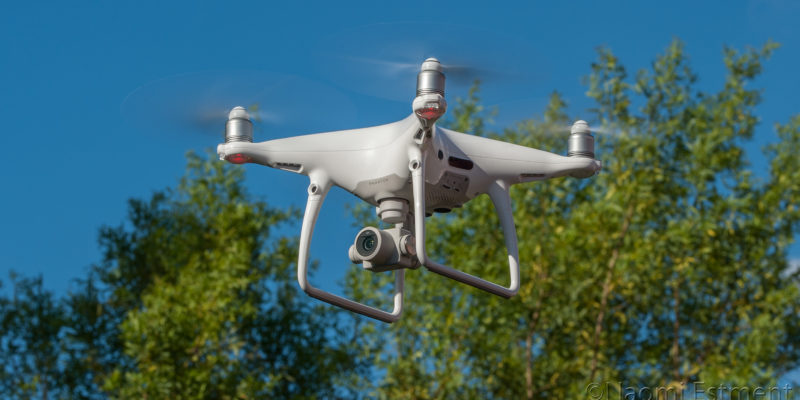
DJI Phantom 4 Pro, photographed by Naomi Estment

Drone Technology Marches On

It’s been challenging getting my DJI Inspire booked onto aeroplanes, due to its size and controversial looks, which caused airport security to give me a hard time – as if I were about to highjack the plane or something sinister like that. To address this issue, it was time to look for a smaller drone that could up the game technologically and produce even better imagery.

The Inspire has served us faithfully for the last three years, producing world class HD video at up to 120 frames per second for amazing slo-mo footage that has blown our clients away. However, in my opinion, the image quality of the photos could be improved, particularly in low light. Don’t get me wrong, the images are more than acceptable for the purposes required, but I’ve been hoping for DJI to provide a new, large sensor camera on a smaller frame that would improve the video quality even more and produce higher grade photographs. Guess what? A couple of weeks ago DJI launched the Phantom 4 Pro. My prayers were answered.

Just in time, because we are doing a long-term time lapse video of a massive development project by Fortress Income Fund on the old Clairwood Race Course, near Durban. Fortress is one of our esteemed, long term clients who is leading the way in the warehousing and logistics industry, and since this is a 3-year construction project, we’ll be doing quite a few trips in the foreseeable future. Their compelling visual portfolio will include traditional ground based progress photos and videos, as well as regular aerial coverage.

It was a pleasure to check in at the airport yesterday with my Phantom 4 Pro, which performed perfectly during the morning to capture this early stage of development. Here’s one of the aerial photos that I took, to show you the image quality:

Aerial View of Fortress Construction Site

The Phantom range of DJI drones have been the most successful in the short history of stabilised flying film and photo platforms, but they have always been the bridesmaid to the amazing Inspire range of professional DJI drones. That has just changed, as if the engineers at DJI sensed my dilemma and worked overtime to deliver a new Phantom that fully qualifies as a professional filming drone, good enough to be used in Hollywood feature films. 4k video at 50 FPS and a bit rate of 100 Mb/sec! Yes please. It is half the size of the Inspire, ideal for hand luggage in its discreet carry case that holds 4 batteries and all the bits required for shoots.

The tech specs and smart functionality are mind blowing, enabling even more precise flying and route planning than before. The inspire doesn’t come close – sorry Inspire 🙂 My favourite features on this little powerhouse include a camera sensor (ALMOST 5 X BIGGER than previous ones), manual aperture, shutter, ISO and exposure control, manual and auto focus, plus a host of setting options. The bit rate of 100 Mb/sec ensures that all the data is accurately captured and the new route planning functionality such as Tripod Mode, Draw, Tap Fly and obstacle avoidance will certainly assist me in complicated route planning and camera control.

Thank you for the new P4 Pro, DJI. And thank you Action Gear team for your support. May technology keep marching on . . . I love it!